
How to Repair a Damaged Skin Barrier (Redness, Irritation, Peeling)
If your face suddenly feels tight, red, stingy, or flaky—welcome to the world of a compromised skin barrier. Don’t panic, it’s way more common than you think. From over-exfoliation to harsh weather, your skin barrier can take a hit, but the good news is: with the right steps, you can rebuild it quickly and get your glow back.
What Exactly Is the Skin Barrier?
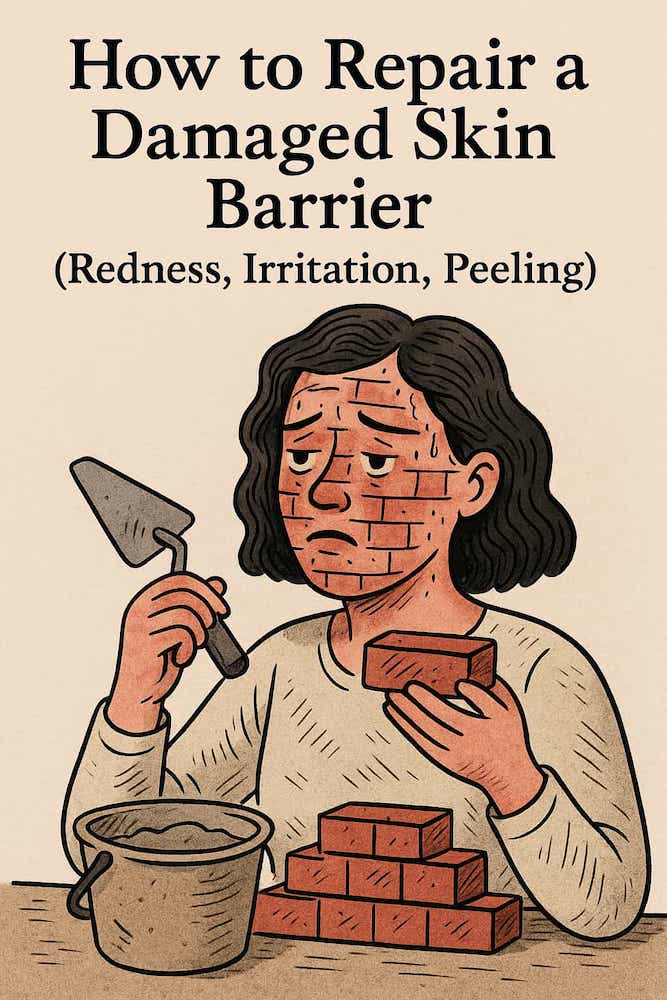
Think of your skin barrier like a brick wall. The skin cells are the “bricks” and natural lipids (fats) are the “mortar” that keeps it strong. When this wall breaks down, moisture leaks out and irritants sneak in—leading to redness, peeling, stinging, and breakouts.
The Signs Your Skin Barrier is Damaged
- Persistent redness or flushing
- Stinging or burning from products you normally tolerate
- Flakiness or peeling patches
- Sudden dryness or tightness
- Increased sensitivity to sun, wind, or even tap water
Sound familiar? Then let’s fix it.
Step 1: Strip Back Your Routine
This is not the time for 12 steps and actives. Hit pause on:
❌ Retinoids
❌ Vitamin C serums
❌ Acids (AHAs/BHAs)
❌ Scrubs or clay masks
Instead, simplify to just 3 steps: gentle cleanser + barrier-repairing moisturizer + sunscreen.
Step 2: Use a Gentle, Low-pH Cleanser
Harsh foaming cleansers can worsen irritation. Opt for a hydrating, non-stripping formula.
- Premium pick: CeraVe Hydrating Cream-to-Foam Cleanser → Find on Amazon
- Affordable alternative: La Roche-Posay Toleriane Hydrating Gentle Cleanser → Find on Amazon
- Super budget: Vanicream Gentle Facial Cleanser → Find on Amazon
Step 3: Flood Skin with Barrier-Loving Ingredients
Look for ceramides, cholesterol, fatty acids, hyaluronic acid, and niacinamide. These replenish the “mortar” between your skin cells.
- Premium: SkinCeuticals Triple Lipid Restore 2:4:2 → Find on Amazon
- Mid-range: CeraVe Moisturizing Cream → Find on Amazon
- Budget hero: Eucerin Advanced Repair Cream → Find on Amazon
Step 4: Lock It In with an Occlusive
If you’re peeling or cracked, layer a healing ointment over moisturizer at night. Think: “slugging lite.”
* Aquaphor Healing Ointment → Find on Amazon
* La Roche-Posay Cicaplast Baume B5 → Find on Amazon
Step 5: SPF Is Non-Negotiable
Damaged skin = extra vulnerable to UV. Choose a soothing, mineral-based sunscreen.
* EltaMD UV Restore Broad-Spectrum SPF 40 → Find on Amazon
* CeraVe Hydrating Mineral Sunscreen SPF 30 → Find on Amazon
Lifestyle Hacks to Speed Recovery
* Hydrate from within: Aim for 2L of water daily, add electrolyte-rich options like coconut water.
* Omega-3s: Salmon, flaxseeds, or a fish oil supplement can rebuild lipids.
* Switch pillowcases 2–3x a week: Cotton traps oil and bacteria.
* Skip hot showers: Warm, not scalding.
* Chill on stress: Stress hormones = inflammation = slower healing. Try box breathing or short walks.
Final Word
Healing your skin barrier takes patience + consistency. Within a week, most people notice less redness and irritation. In 3–4 weeks, your barrier should be back to full strength. Then (and only then), slowly reintroduce actives.
Remember: healthy skin isn’t about how many products you use, but how well your skin barrier is protected. Treat it like the VIP it is. 💖
---
💧 Want to see which products suit your skin type? Try Scincare & Beauty AI for a personalized analysis in seconds.
Recommendations do not replace consultations with real doctors.
This article may contain affiliate links. This means we may earn a commission if you click and make a purchase, at no extra cost to you. As an Amazon Associate, I earn from qualifying purchases.